

Hypersonic Technology Market Expected to Grow to $13.02 Billion by 2030 with a CAGR of 9.5%
Hypersonic Technology Market
Hypersonic Technology
Hypersonic Technology Market Report
The Business Research Company’s Hypersonic Technology Global Market Report 2026 – Market Size, Trends, And Forecast 2026-2035
LONDON, GREATER LONDON , UNITED KINGDOM, October 16, 2026 /EINPresswire.com/ -- The hypersonic technology sector is emerging as a high-value segment within the broader defense and aerospace industries. As nations prioritize advanced weapons systems and aerospace innovations, the market for hypersonic technologies is set to experience substantial growth. Below is a detailed overview of market size, leading regions and countries, segments, key drivers, major players, and evolving trends shaping this dynamic field.
Market Size and Its Position Within Aerospace and Defense
The hypersonic technology market is projected to exceed $13 billion by 2030. When compared to its parent defense market, which is anticipated to reach roughly $724 billion in the same year, hypersonic technology will make up about 2% of that sector’s total value. Within the even broader Aerospace & Defense industry, expected to be worth $1,166 billion by 2030, hypersonic technology will represent close to 1% of the overall market size.
Request A Free Sample Of The Hypersonic Technology Market Report
https://thebusinessresearchcompany.com/sample_request?id=17426978&type=smp&name=Hypersonic%20Technology%20Market%20Report%202026&utm_source=EINPresswire&utm_medium=Paid&utm_campaign=Oct_PR
North America as a Dominant Player in Hypersonic Technology by 2030
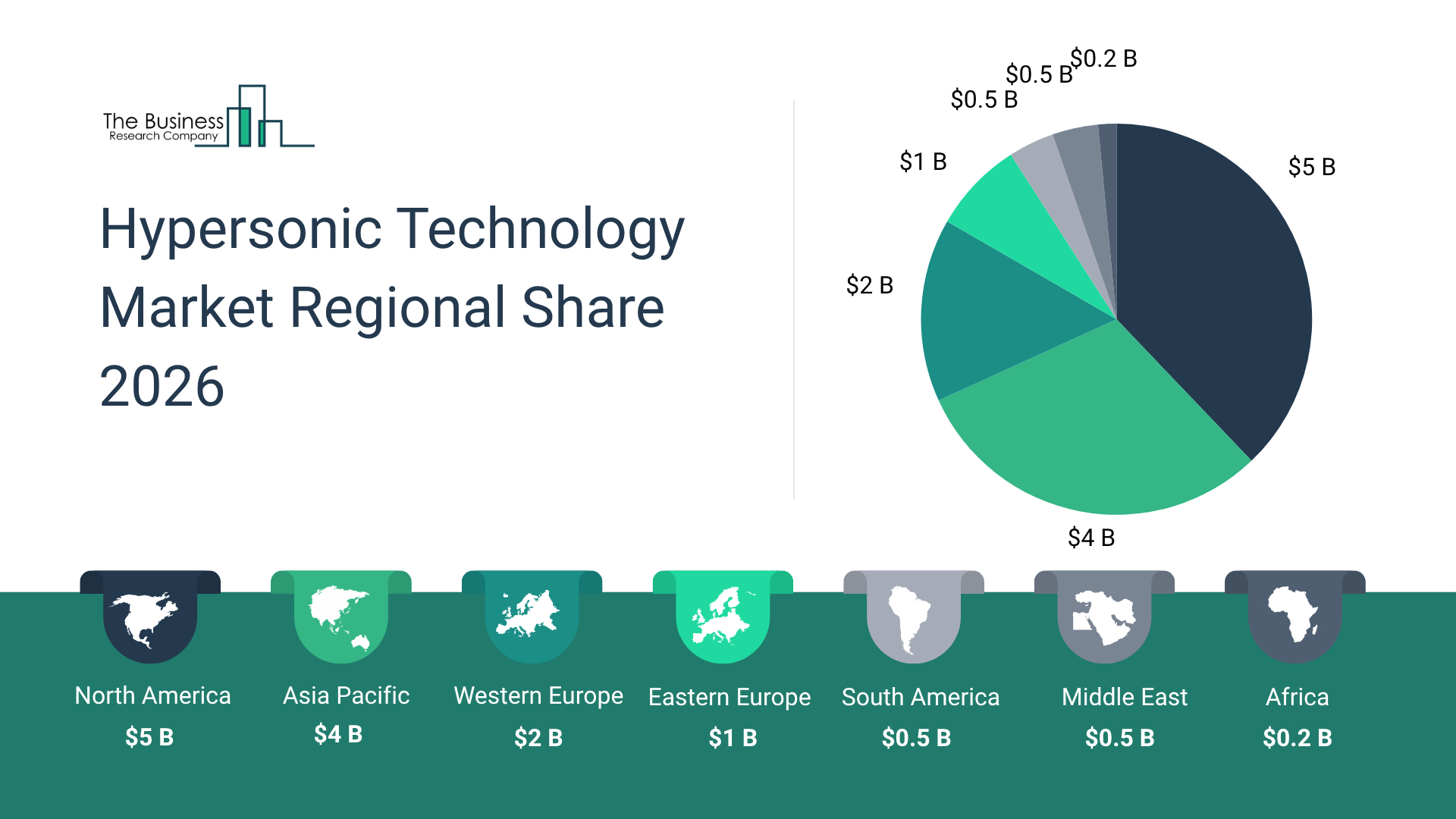
North America is forecasted to lead the hypersonic technology market globally, with a valuation of $5.4 billion in 2030. The market there is expected to expand from $3.4 billion in 2025, growing at a compound annual growth rate (CAGR) of 9%. This robust growth is propelled by escalating investments in next-generation defense modernization, deployment of cutting-edge strategic deterrence systems, increased government funding for hypersonic weapon development, closer collaboration between defense agencies and aerospace contractors, and continuous advancements in materials, propulsion systems, and flight testing infrastructure.
The United States as the Largest Hypersonic Market Nation in 2030
The United States will hold the largest share of the global hypersonic technology market in 2030, valued at $4.7 billion. Starting from $3.0 billion in 2025, it is expected to grow at a 9% CAGR. This growth stems from vigorous research and development efforts focused on hypersonic platforms, growing purchases of advanced missile systems for national security, substantial federal funding for aerospace innovation, expansion of specialized testing facilities, and an emphasis on maintaining a technological edge in emerging defense sectors.
Access The Detailed Hypersonic Technology Market Report Here
https://thebusinessresearchcompany.com/report/hypersonic-technology-global-market-report?utm_source=EINPresswire&utm_medium=Paid&utm_campaign=Oct_PR
Leading Segments in the Hypersonic Technology Market by 2030
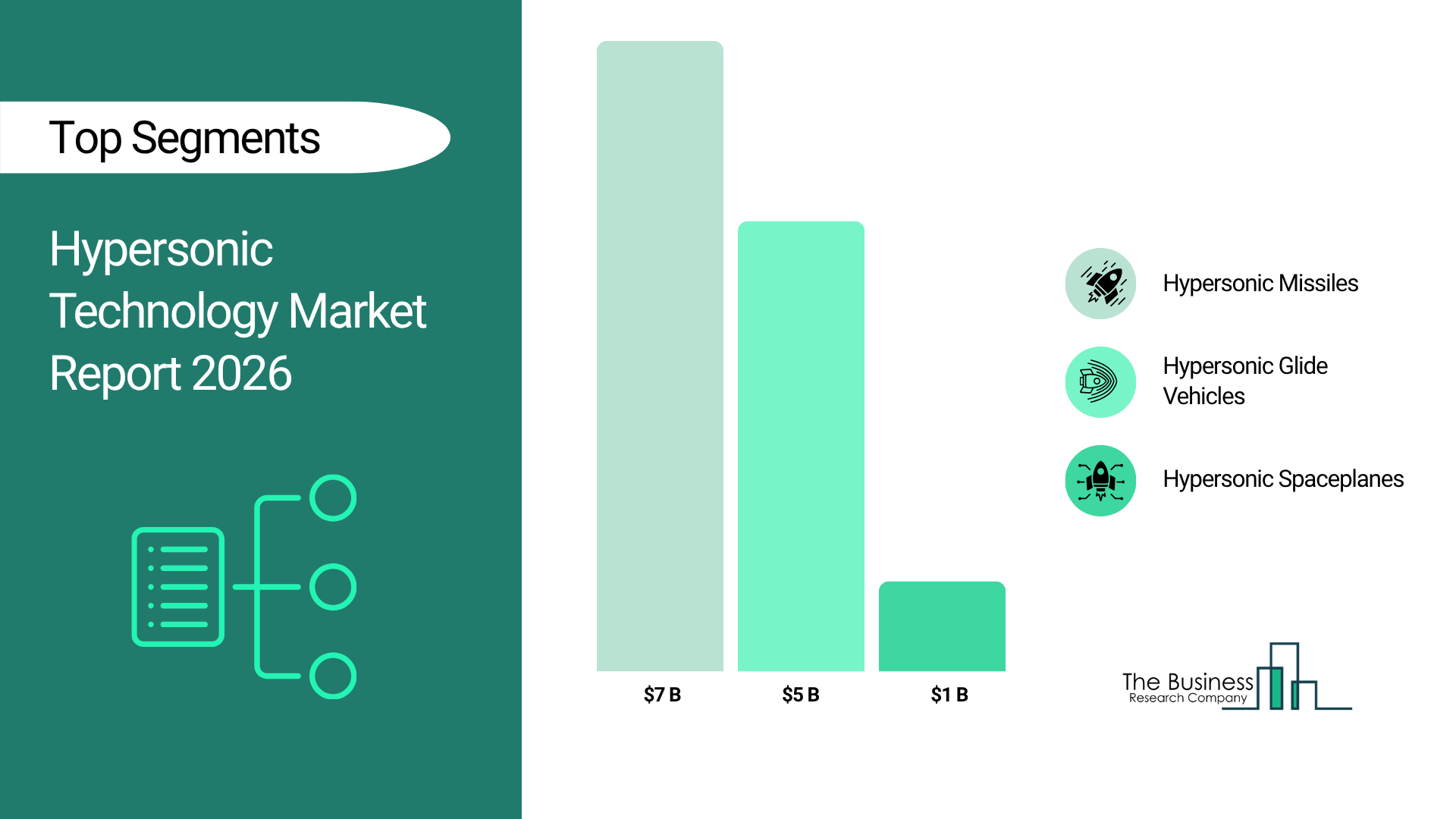
The market divides into three primary types: hypersonic missiles, hypersonic glide vehicles, and hypersonic spaceplanes. Hypersonic missiles will remain the dominant segment, accounting for 53% of the market or approximately $7 billion by 2030. This segment benefits from rising demand for rapid-response strike capabilities, a growing military focus on long-range precision systems, increased investment in guidance and maneuverability technologies, expanded defense procurement, and ongoing improvements in propulsion and mission effectiveness.
Segment Breakdown by Components, Launch Modes, and End Users
Hypersonic technology components include engines, materials and structures, avionics and control systems, propulsion systems, and fuel and storage solutions. The launch modes span air-launched, surface-launched, and subsea-launched platforms. End users encompass government and defense agencies, aerospace manufacturers, research institutions, commercial airlines, and space agencies.
Growth Rate Expectations for Hypersonic Technology Through 2030
The hypersonic technology market is anticipated to grow at a steady compound annual growth rate (CAGR) of 9% through to 2030, reflecting strong demand and continuous innovation in this advanced sector.
Key Drivers Behind Market Expansion
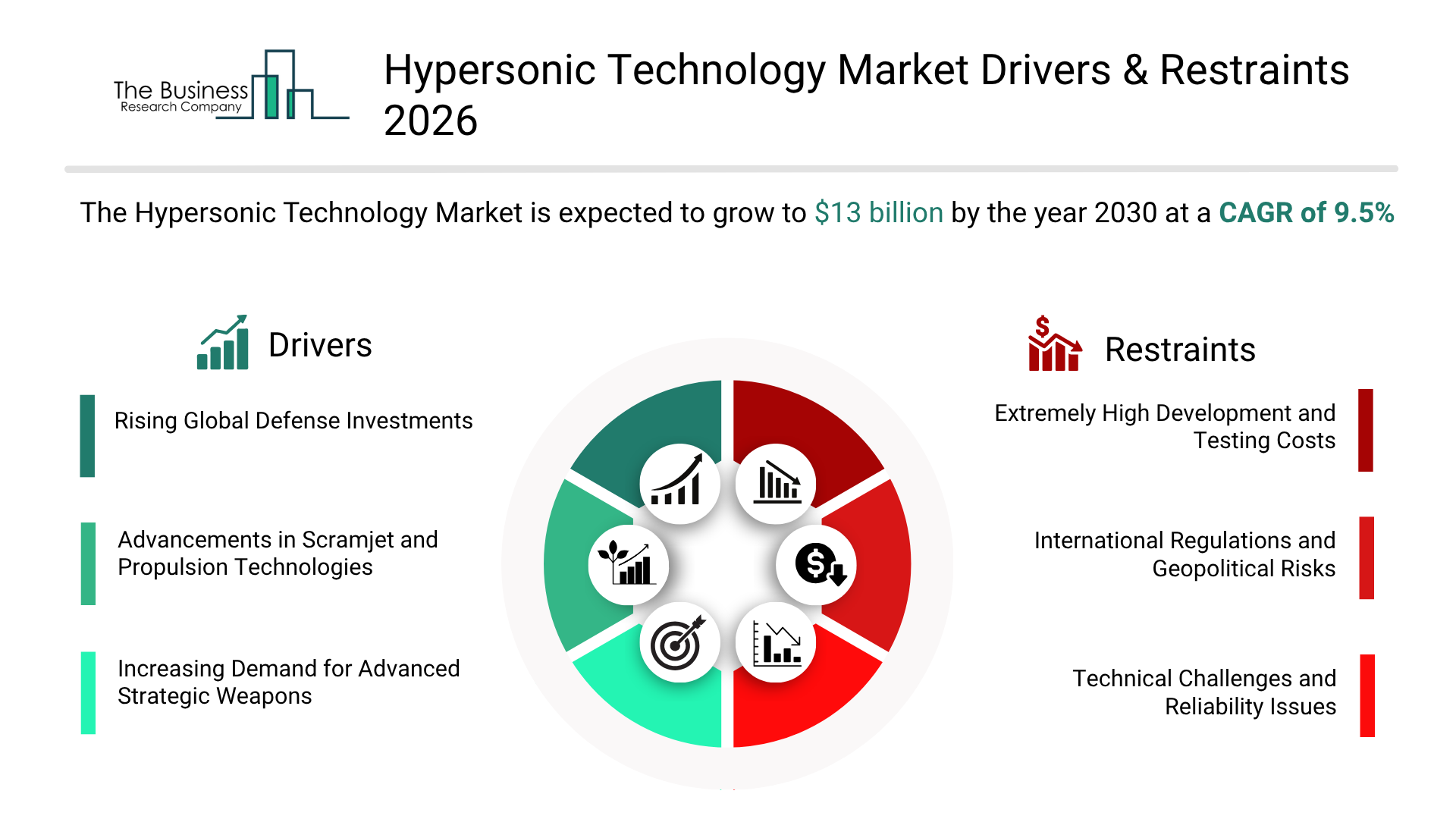
One of the primary factors accelerating growth is the rising global investment in defense. Countries worldwide are increasing their defense budgets to enhance national security and maintain strategic deterrence, funneling significant funds into next-generation weapons, aerospace systems, and long-range strike technologies. This sustained funding supports the accelerated development, testing, and deployment of hypersonic platforms, contributing to approximately 2.5% annual growth in the market.
Technological progress in scramjet and propulsion systems also plays a crucial role. Advancements in these areas improve flight stability, range, and overall hypersonic mission performance. Engineers and researchers are focused on enhancing engine efficiency, thermal management under extreme conditions, and sustained high-speed operation. These breakthroughs are expected to contribute an additional 2.5% growth per year.
Growing demand for highly advanced strategic weapons forms another strong growth catalyst. Military forces are increasingly investing in rapid-response, highly maneuverable systems that can penetrate sophisticated defense networks. Hypersonic technologies offer unmatched speed, precision, and flexibility, which are critical for modern warfare. This trend is projected to add roughly 2.3% growth annually to the market.
Opportunities in Key Hypersonic Segments by 2030
The hypersonic missiles, glide vehicles, and spaceplanes markets together are expected to generate over $4.5 billion by 2030. This growth is driven by demand for high-speed precision strike capabilities, increased investment in aerospace innovation programs, expansion of flight testing and validation infrastructure, and a strategic focus on extending operational reach and superiority. Between 2025 and 2030, the hypersonic missiles and glide vehicles markets are projected to each grow by $2 billion, while the spaceplanes segment is expected to expand by $0.5 billion.
Market Composition and Company Strategies
The hypersonic technology sector is dominated by a mix of global defense contractors, aerospace manufacturers, and propulsion technology innovators. These companies are concentrating on next-generation hypersonic weapons, advanced materials engineering, propulsion system development, precision guidance, navigation technologies, and comprehensive flight testing. Key areas of focus include ultra-high-speed performance, mission reliability, thermal protection, operational range improvements, and compliance with stringent military standards. Understanding this competitive landscape is critical for stakeholders pursuing growth, innovation, and strategic partnerships in the hypersonic ecosystem.
Leading Hypersonic Technology Market Player
Lockheed Martin Corporation emerged as the top market leader in 2025, holding a 13% market share. Their missiles and fire control division offers a wide array of hypersonic strike systems, advanced missile technologies, integrated launch solutions, and strategic defense platforms that provide long-range precision, high-speed maneuverability, and operational superiority.
Key Companies Driving the Hypersonic Technology Market
Other major players active in this market include Raytheon Technologies Corporation, Northrop Grumman Corporation, The Boeing Company, BAE Systems plc, L3Harris Technologies Inc., MBDA, Thales Group, Aerojet Rocketdyne Holdings, Leonardo S.p.A., Leidos Holdings Inc., Rafael Advanced Defense Systems Ltd., Kratos Defense and Security Solutions, Dynetics Inc., Defence Research and Development Organisation (DRDO), Rocket Lab USA Inc., SpaceX, Hermeus Corporation, ArianeGroup SAS, Destinus SA, Venus Aerospace Inc., Hypersonix Launch Systems Ltd., Exquadrum Inc., Spectral Energies LLC, and Specter Aerospace Inc.
Market Concentration and Competitive Landscape
The hypersonic technology market is highly concentrated, with the top 10 companies accounting for 67% of total revenue in 2025. This concentration reflects the technological complexity, high R&D costs, stringent defense procurement regulations, and national security considerations involved. Leading firms like Lockheed Martin, Raytheon Technologies, Northrop Grumman, Boeing, BAE Systems, L3Harris, MBDA, Thales, Aerojet Rocketdyne, and Leonardo maintain significant shares through advanced technology portfolios, long-standing government contracts, specialized engineering know-how, and strategic partnerships. As demand grows for next-gen strike and propulsion systems, these companies are well positioned to capitalize on innovation and modernization programs.
Important Suppliers of Raw Materials
Key raw material providers supporting the hypersonic technology market include Honeywell International Inc., Carpenter Technology Corporation, ATI Inc., Haynes International, Kennametal Inc., Hexcel Corporation, Toray Industries, Solvay SA, Teijin Limited, Materion Corporation, VSMPO-AVISMA Corporation, Alleima AB, Aperam S.A., Precision Castparts Corp., Arconic Corporation, CoorsTek Inc., Saint-Gobain S.A., Morgan Advanced Materials plc, and Kymera International.
Wholesalers and Distributors Serving the Market
Major distribution and wholesale companies in this sector include Wesco International, Arrow Electronics, Avnet, TTI, Future Electronics, RS Group, Mouser Electronics, DigiKey Corporation, Newark Electronics, Sager Electronics, Powell Electronics, Heilind Electronics, Rutronik Elektronische Bauelemente GmbH, Farnell Global, Master Electronics Corporation, Velocity Electronics, Smith & Associates, Fusion Worldwide, and ASAP Semiconductor.
Primary End Users of Hypersonic Technology
Principal end users range from government defense agencies such as the U.S. Department of Defense, U.S. Air Force, Navy, and Army to prominent aerospace and research organizations like NASA, Defence Research and Development Organisation (DRDO), Indian Air Force, Indian Space Research Organisation, UK Ministry of Defence, Royal Air Force, French and German Armed Forces, Japan Ministry of Defense, Japan Aerospace Exploration Agency, China’s People’s Liberation Army, China National Space Administration, Russian Aerospace Forces, Roscosmos, and the Australian Department of Defence.
Noteworthy Competitive Trends Transforming the Market
A significant innovation reshaping the hypersonic technology landscape is the emergence of detonation-based propulsion systems, which offer enhanced flight speeds, improved propulsion efficiency, and superior operational performance for advanced hypersonic vehicles. For example, in June 2024, Venus Aerospace introduced the VDR-2 Detonation Ramjet—an engine designed for hypersonic aircraft capable of speeds exceeding Mach 5. Its efficient combustion design, lightweight composite materials, and optimized air-breathing features increase propulsion effectiveness, reduce fuel consumption, and support demanding defense and aerospace missions requiring sustained hypersonic flight.
Strategies Companies Employ to Maintain a Competitive Edge
Industry leaders are focusing on several key strategies, including the development of advanced scramjet propulsion technologies to boost flight performance, utilization of high-temperature composite materials to improve thermal resistance, forging strategic defense partnerships to speed up hypersonic program development, integrating artificial intelligence to enhance guidance and navigation systems, and investing heavily in flight testing to validate operational readiness and deployment capabilities.
This comprehensive snapshot highlights how the hypersonic technology market is evolving rapidly, driven by substantial defense investments, technical advancements, and strategic demand for next-generation aerospace capabilities.
What’s new in our 2026 market reports:
• Market attractiveness scoring and analysis
• Total addressable market (TAM) analysis
• Company scoring matrix graphics and tables
• Excel dashboards
• Market hotspots infographics
• Key technologies and future trends
• Updated graphics and tables
Learn More About The Business Research Company
The Business Research Company (www.thebusinessresearchcompany.com) is a leading market intelligence firm renowned for its expertise in company, market, and consumer research. We have published over 30,000+ reports across 27 industries and 60+ geographies. Our research is powered by 1,500,000 datasets, extensive secondary research, and exclusive insights from interviews with industry leaders.
We provide continuous and custom research services, offering a range of specialized packages tailored to your needs, including Market Entry Research Package, Competitor Tracking Package, Supplier & Distributor Package and much more.
Disclaimer: Please note that the findings, conclusions and recommendations that TBRC Business Research Pvt Ltd delivers are based on information gathered in good faith from both primary and secondary sources, whose accuracy we are not always in a position to guarantee. As such TBRC Business Research Pvt Ltd can accept no liability whatever for actions taken based on any information that may subsequently prove to be incorrect. Analysis and findings included in TBRC reports and presentations are our estimates, opinions and are not intended as statements of fact or investment guidance.
Contact Us:
The Business Research Company
Americas +1 310-496-7795
Europe +44 7882 955267
Asia & Others +44 7882 955267 & +91 8897263534
Email: marketing@tbrc.info
Follow Us On:
LinkedIn: https://in.linkedin.com/company/the-business-research-company.
Oliver Guirdham
The Business Research Company
+44 7882 955267
info@tbrc.info
Visit us on social media:
LinkedIn
Facebook
X
Legal Disclaimer:
EIN Presswire provides this news content "as is" without warranty of any kind. We do not accept any responsibility or liability for the accuracy, content, images, videos, licenses, completeness, legality, or reliability of the information contained in this article. If you have any complaints or copyright issues related to this article, kindly contact the author above.
